
Olena Gadomska: Ten Minutes That Changed Everything
The War began like a disaster movie, only we – Ukrainians – became the main characters without casting and against our will.
Life before February 2022 was routine – morning coffee, getting ready, taking the child to school, city traffic jams, the office, traffic jams again, school, home.
In the midst of all this, I was happy – family, a ginger cat and a dog at home, a good job in a good place, wonderful colleagues, a professional career. A favourite cinema, coffee shops, friends, sports, travel, and plans for the future.

I write this text, and before my eyes is beloved Kyiv in the cool night air, breathing out the heat of the workday. I walk after work along the highway lit by lanterns, already free of noisy traffic jams, under the relaxing music of the evening. The ancient and majestic Dnipro (river) draws into its depths the shadows of pedestrians on the embankment and the shimmering glow of cafés.
I write this text, and I recall the last celebration of Ukraine’s Independence Day. Friends, a picnic, a grand military parade on beautiful Khreshchatyk with flowers, balloons, Ukrainians in embroidered shirts, biking in the park, Kyiv in August.
I write this text – and I recall my parents, family celebrations and simply days, countless jars of freshly made jam from my mom and how I carried it all to the car trunk, the pleasant fuss of finding Christmas presents.
russia’s full-scale invasion (War)
Every Ukrainian’s morning of February 24, 2022 – was so alike and so different. News of russia’s full-scale invasion spread across the whole country and flew around the world.
It was early morning, about 4 a.m.
Half-asleep, I hear – “Mom, Dad, War!! People outside are packing things into cars.”
My husband and I jumped up in a second, disoriented, in a chaos of thoughts and actions. I froze, as if denying reality to myself. We turned on the TV, caught official news that brought no comfort – russia’s black and cruel Mordor was advancing on Kyiv.
Those 10 minutes of the new reality stretched out like hours. Then calls to parents, coordination with friends, crowds rushing into shelters, queues at gas stations for fuel, newly opened volunteer enlistment centres for the army and territorial defence, searching for the first helmets and boots for soldiers, and huge traffic jams on the way out of Kyiv.
Each of us had prepared an Emergency backpack with documents, medicines, water, and a sleeping mat. At night, we slept dressed, with shoes and backpacks beside us – to jump into them and run to the shelter from russia’s bombings.
In the following days, we searched for bread, eggs, milk in shops – they were gone. We bought essentials – flashlights, matches, power banks, batteries. We stood in queues at pharmacies that now opened only a couple of hours a day, and medicine supplies melted away.
My daughter went outside the city with my parents, my husband, and I stayed in Kyiv under the sounds of air defence at work. Later, Ukrainians, half-asleep, would learn to tell apart the sounds of shaheds, missiles, and gunfire. We did not believe this surrealism, we followed the movement of russian troops. Curfew in Kyiv became empty, oppressive, and eerie, with checkpoints, iron “hedgehogs” on the roads, burned cars here and there, and soldiers. Bridges in the city were blocked, cutting off the chance for my parents to reach us.
It was like a disaster movie, only we – Ukrainians – became the main characters without casting and against our will.
After a few days, my daughter, our dog and I would leave the country. My husband drove us to the border with Poland, where on a frosty March night we walked five hours across the border together with a huge number of other Ukrainians – fleeing the war. I was sick. Just after another chemotherapy, with a pack of medicines in my suitcase to keep me from vomiting on the road. I left my sick father. We both had cancer. Only I survived, and he did not.
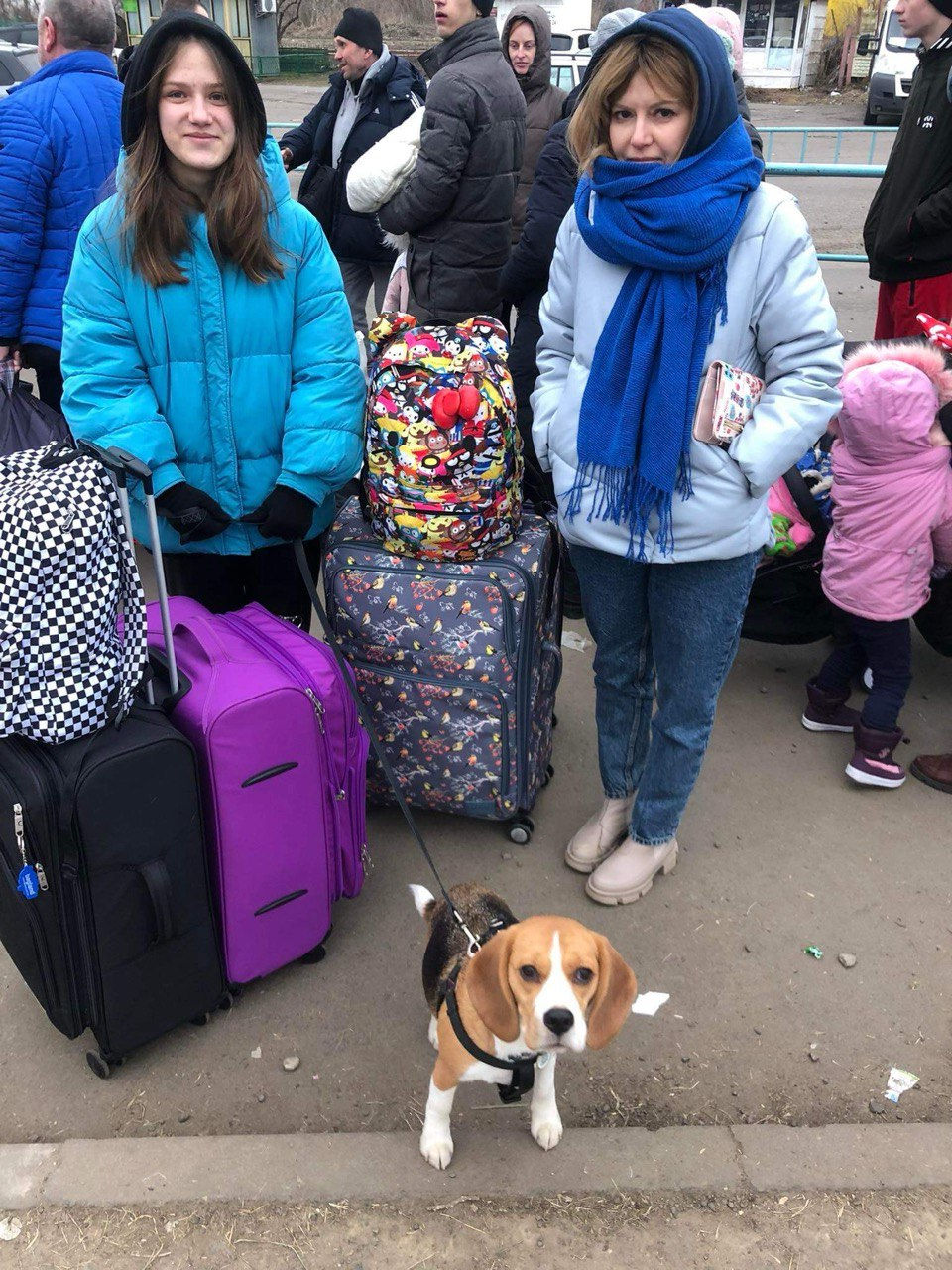
My husband stayed in Ukraine to volunteer and help the army. My parents stayed in Ukraine. My mother flatly refused to leave – she is a children’s doctor and wasn’t going to abandon her patients and my father.
In Poland, we found rescue. The brotherly country was well prepared to receive refugees. Immediately after crossing the Ukrainian-Polish border, we received medical, psychological help, food for ourselves and our pet, and a warm place.
Poland sheltered us and became the transit to Canada. In Canada, our family managed to reunite, set up the necessary household, and my daughter studies in high school and dreams of becoming an architect.
Grassroots
Personally, I started to feel the taste of life in Canada when I joined Grassroots Response to the Ukrainian Crisis (Grassroots), where I found a community to connect with. It was during the long winter that didn’t let you stick your nose outside because of severe frosts – short days, no sun, a bit of gloom. Bored at home, I saw a request from Grassroots for someone who could write texts about the events organized by the initiative. So, after a while, I was already running among volunteers in another Guest House for Ukrainian families, catching moments of their work on camera and noting down stories about them. Then other events.
Volunteering with Grassroots brought me back to my beloved work – writing stories and taking photos. Meetings, interviews, new faces, and acquaintances gave me the chance to meet wonderful people and hear the stories of their lives, their volunteering, and their roots – Carol, Leesa, Dave, Karen, Lirondelle, Ivan (John), Mark, Ihor, Larysa, Herb, Irma and others.

Grassroots is people – Ukrainians and Canadians, who impress with their persistence and unwavering help for the third year of war in Ukraine, at a time when in some places the World is tired of the war and puts aid to Ukrainians on pause. Volunteers, by some unwritten moral code, stick together and, daily, systematically support Ukrainian families, covering countless needs that seemed impossible to solve.
Today, Grassroots remains a vital initiative that supports us – Ukrainians – with psychological help, advice, and deeds. They organize and hold many events that ease the adaptation process – meetings with banks, realtors, tax and employment consultations, help with necessary documents, temporary housing, children’s camps, rescue in hopeless situations, and more.
Grassroots cares for mental health, launching together with Canadian volunteers free psychotherapy support and organizing a women’s space – Healing Art – a place for meeting and creating art. Such a space became for me a place – sometimes of comfortable silence, sometimes of absorbing art, sometimes just of communication. Fingers crossed, I look forward to more meetings.
In the end, my family and I accept the circumstances of our life, we accept the uncertainty of the future, despite which we try to make plans, we rejoice in safety and value each day – we walk the dog, cook dinner, work, study.
Only our evenings and nights are anxious and joyless news from Ukraine, when ballistic missiles, shaheds again fly over our country, bringing death and destruction. When, once again, you are lost in panic, waiting for the message from parents – “we are okay.” So, we just hope that one day we will be able to say out loud again – “We are happy“.
Olena Gadomska.


Comments